Corrugated board is a sandwich. Flat sheets of paper, called liners, are glued to wavy sheets, called fluted mediums. The flutes give the board its stiffness and cushioning, and the liners give it a printable, strong surface. The number of paper layers is the board’s ply.
What 3, 5 and 7 ply mean
- 3 ply (single wall): two liners with one fluted medium between them. It is the most common board for everyday shipping boxes.
- 5 ply (double wall): three liners and two fluted mediums. It is stiffer and suits heavier or stacked loads.
- 7 ply (triple wall): four liners and three fluted mediums, for the heaviest industrial packaging.
The flute size also matters. Our KM-Series lines can be configured for A, B, C and E flute types. Larger flutes give more cushioning and stacking strength; smaller flutes give a flatter, finer surface that prints well. Different flutes can be combined in one 5 or 7 ply board.
How the line builds the board
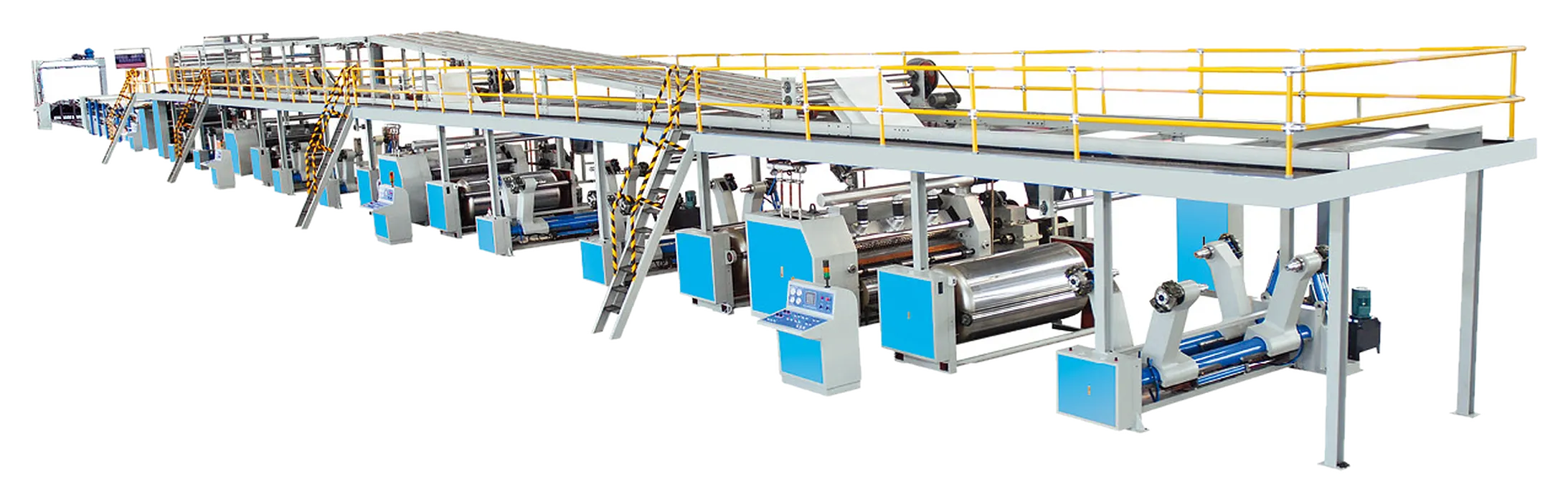
A corrugated production line works as one continuous process, from paper reels to stacked sheets. According to our catalogue, the KM-Series 3/5/7 ply line is made up of:
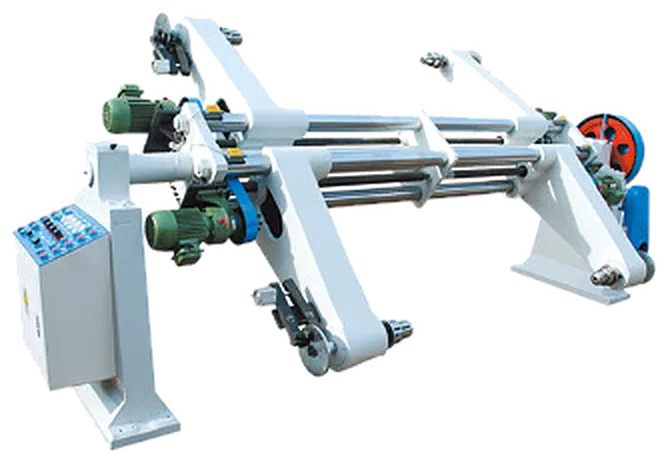
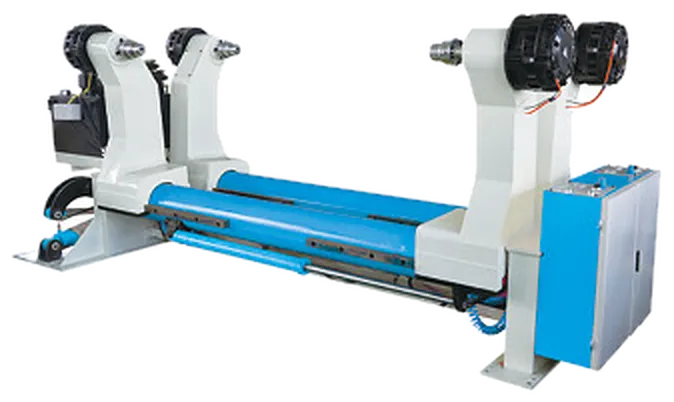
- Mill roll stands hold and unwind the paper reels. Electric stands handle reels up to Φ1500 mm; hydraulic stands take up to 3000 kg on one side.
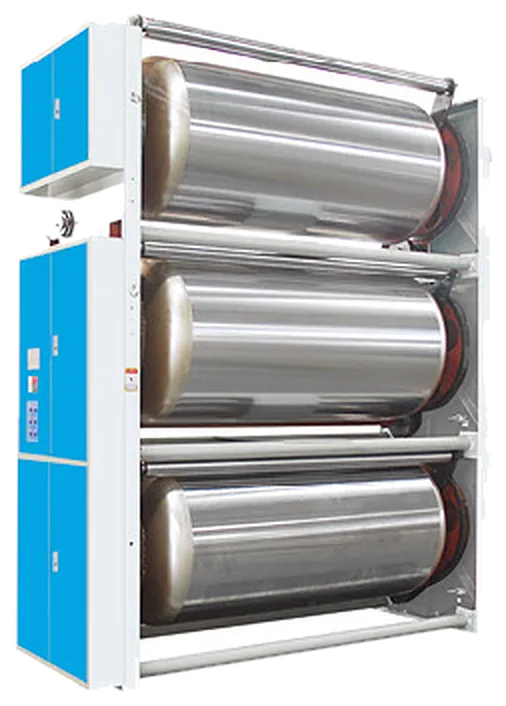
- Preheaters warm the paper so it bonds and forms evenly.
- Single facers form the flute and glue it to the first liner. Each fluted layer in the board needs its own single facer, so a 5 ply line uses two and a 7 ply line uses three.
- The conveying bridge carries and buffers the single-faced web.
- The glue application machine applies glue to the flute tips.
- The double facer adds the final liner and dries the board over a row of hotplates.
- The slitter scorer cuts the board to width and adds fold lines.
- The cut-off cuts the board to length. Our NC cutoff covers lengths from 400 to 9900 mm at ±1 mm.
- The conveyor and stacker collect the finished sheets.
Behind the scenes, the heating system, air compression system and glue making system keep the line supplied.
Speed and width
The catalogue lists line speeds from 100 to 220 m/min and paper widths from 1400 to 2200 mm, with high, middle and low grade configurations. The right choice depends on your output, the widest reel you run and the board grades you sell.
Choosing your line
Start from the board you make and sell: the ply, the flute combination and the sheet sizes your customers order. From there, the number of single facers, the working width and the target speed follow. Tell us those three things and we can recommend a configuration.
Specifications are as per our current catalogue. Final configuration is confirmed at quotation.